If you have a contact form on your website, you probably know the feeling: you open your inbox expecting a new customer enquiry and find a pile of junk instead.
But what actually counts as contact form spam?
The word spam covers several types of unwanted submissions. Understanding them is the first step towards effective contact form spam protection.
The Four Types of Contact Form Spam
Automated Bot Submissions
Bots crawl the web looking for forms to fill in. They may submit gibberish, random links, advertisements, or the same message across thousands of websites.
Some bots repeat the same message. Others change the wording to make automated detection more difficult.
SEO and Link-Building Pitches
"I visited your website and noticed it could rank higher..."
Sound familiar?
These unsolicited SEO and backlink offers are often sent in bulk to businesses with publicly accessible contact forms. They may look personalised, but many are simply automated templates.
AI and Agency Spam
A newer wave of spam promotes:
- AI tools
- Web design services
- Marketing agencies
- Software products
- Development services
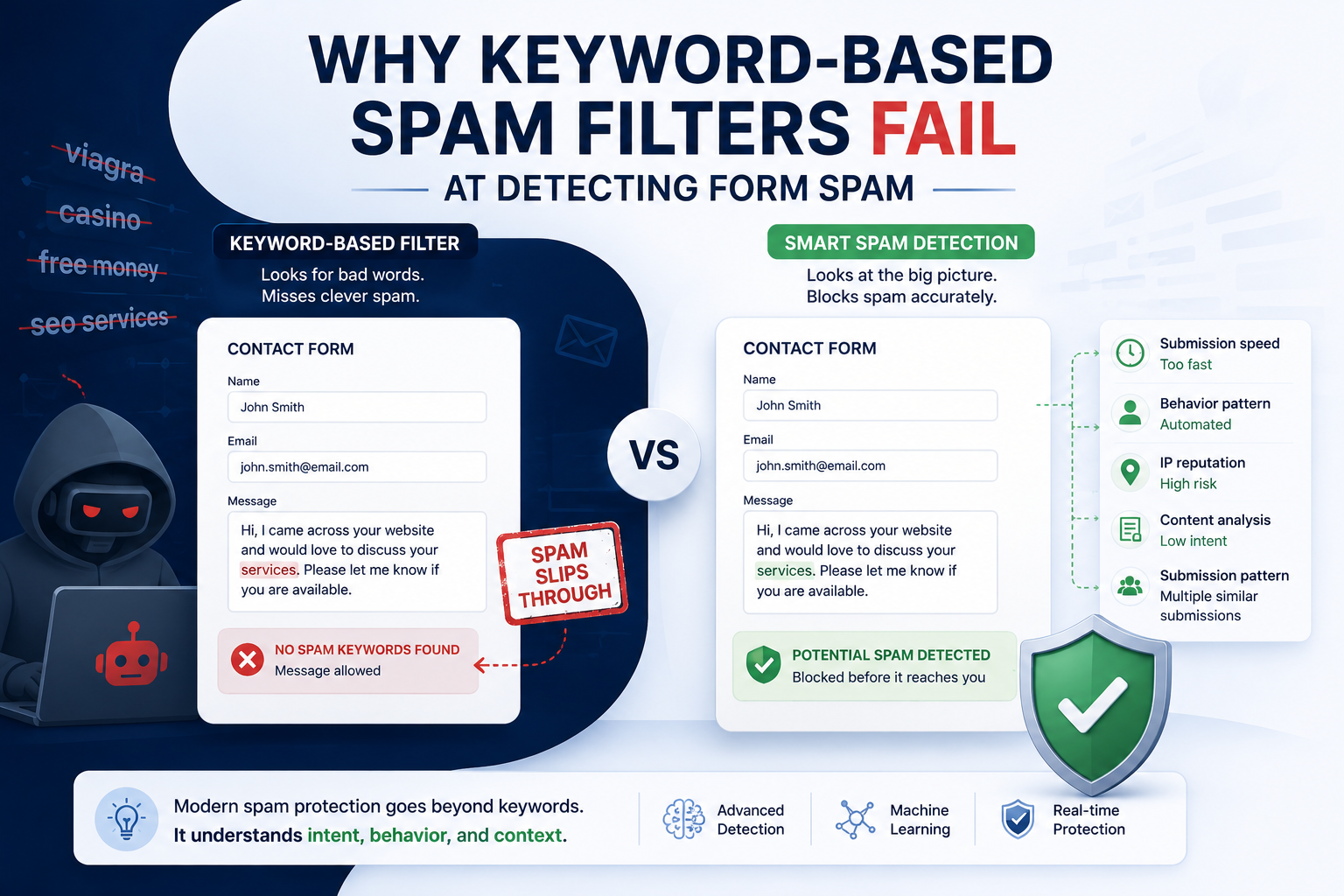
AI-generated messages can sound surprisingly natural, making them harder to identify with simple keyword filters.
Scams and Phishing
Some submissions try to make you click a suspicious link, download a file, or share sensitive information.
These messages are more than annoying—they can create a genuine security risk.
What They All Have in Common
Despite looking different, most contact form spam shares one important characteristic:
It is not a genuine enquiry from someone interested in your business.
The problem is not just the time spent deleting messages.
When spam fills your inbox, genuine enquiries become easier to miss. You may skim messages more quickly, ignore something that looks unusual, or accidentally delete a real lead along with the junk.
Why Contact Form Spam Keeps Growing
Sending spam costs almost nothing, and tools that find and submit website forms are widely available.
A small business may receive only a few unwanted submissions a day. Over time, however, those messages add up and become a regular part of managing the business.
Deleting them manually is not a real solution.
The goal should be to stop unwanted submissions from becoming a problem in the first place.
The Goal: A Clean Inbox of Real People
Effective contact form spam protection should help you focus on the messages that matter.
Automated behaviour, submission patterns, suspicious content, and the context of a message can all help identify unwanted submissions before they reach your inbox.
That means less noise, less manual filtering, and a better chance of seeing genuine enquiries when they arrive.
SpamForms helps businesses detect and filter unwanted contact form submissions while keeping the experience simple for genuine customers.