Spam filtering is designed to keep unwanted messages out.
But what happens when it gets something wrong?
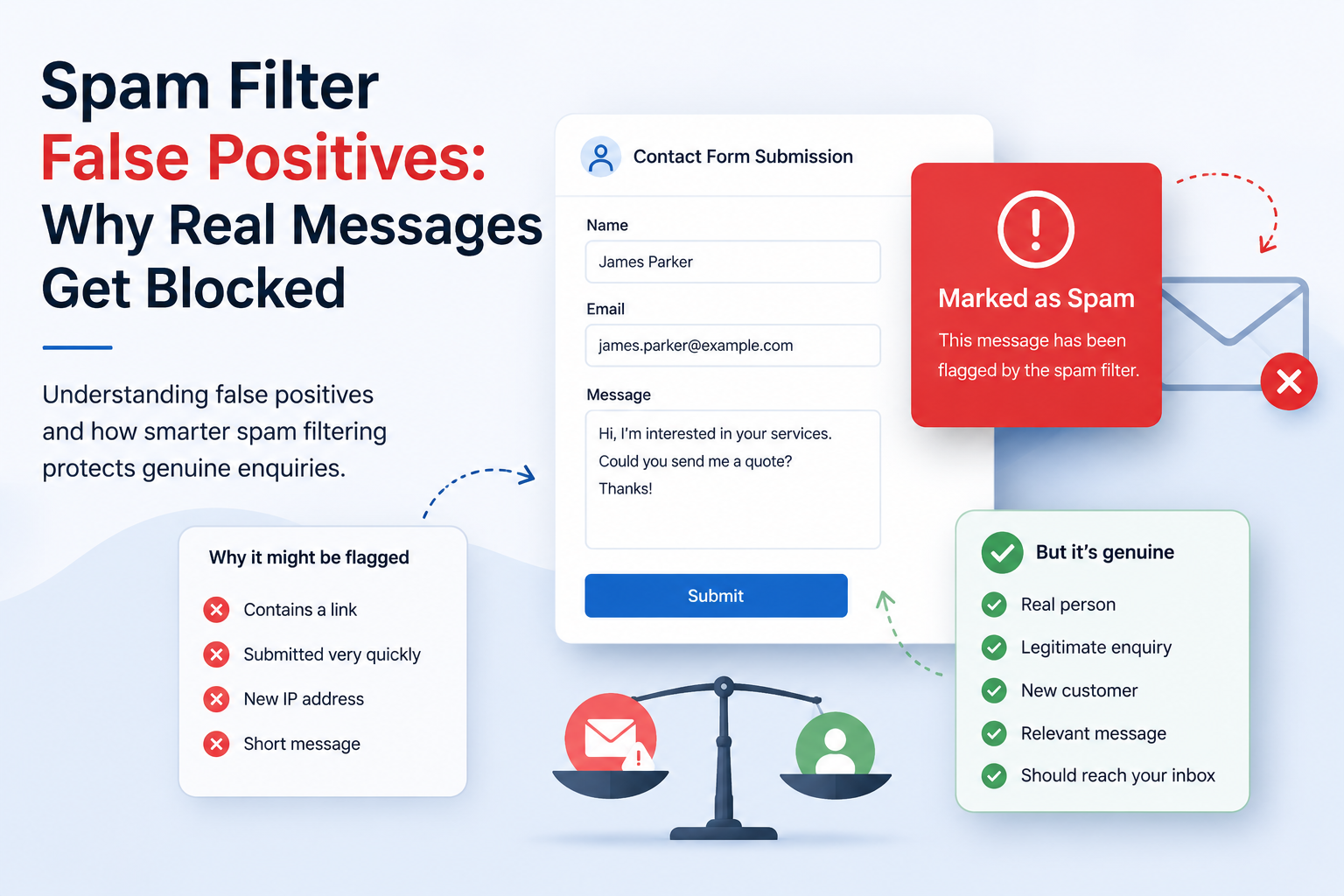
A false positive happens when a legitimate message is incorrectly identified as spam.
For a business using a contact form, this can be a serious problem.
A potential customer may submit a genuine enquiry, but the message gets filtered out before anyone sees it.
The spam is gone.
But so is the lead.
What Is a Spam Filter False Positive?
A false positive occurs when a spam filter incorrectly classifies a genuine message as spam.
For example, a real customer might submit:
"Hi, I found your website through Google. Could you send me a quote for your services?"
But the message could still be flagged because it contains:
- A link
- Certain keywords
- An unusual email address
- A short message
- Formatting that resembles other spam submissions
The customer has done nothing wrong.
The filter simply does not have enough context to recognise that the message is legitimate.
Why Do False Positives Happen?
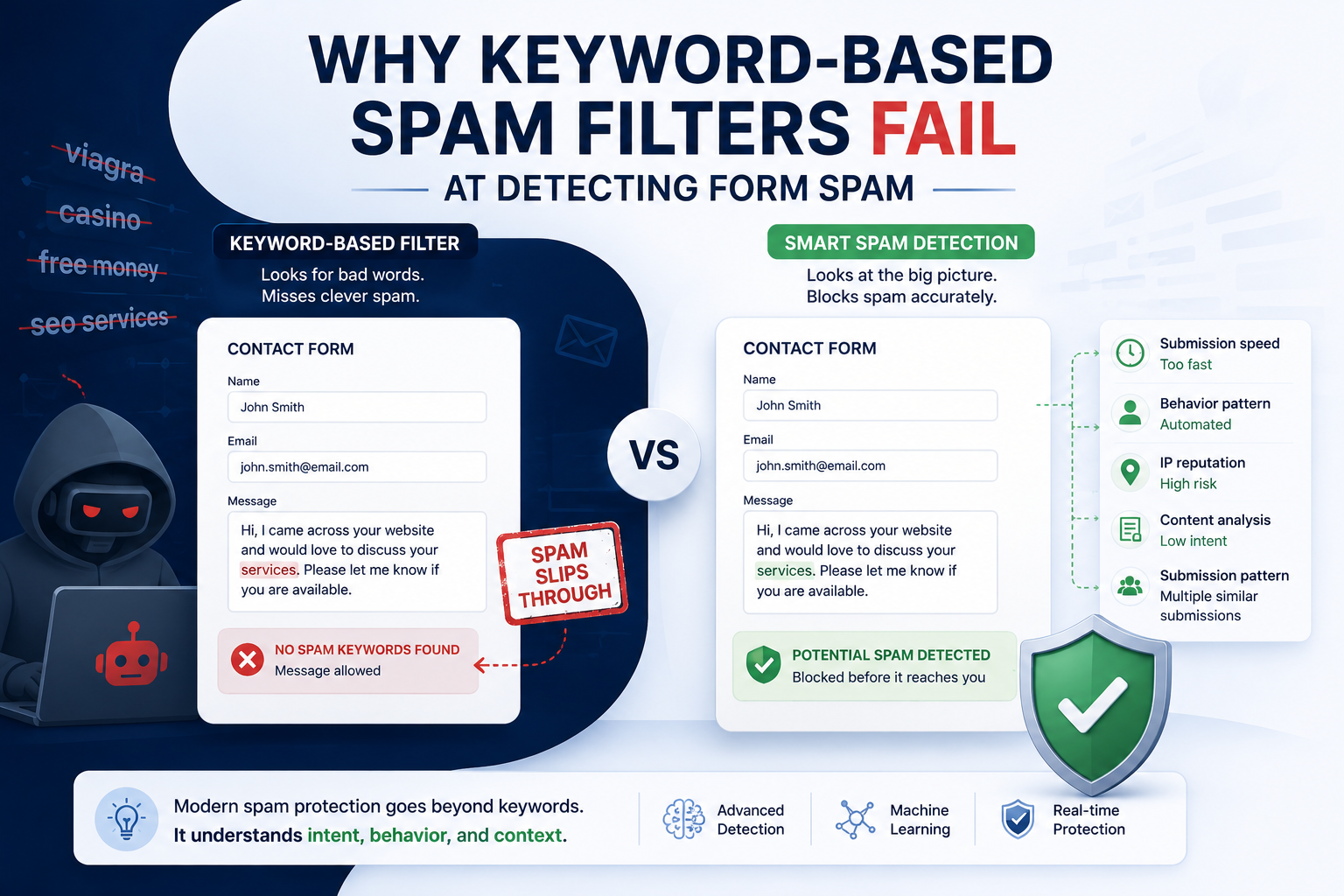
Many spam filters rely on rules and patterns.
For example:
This word appears frequently in spam, so block the message.
Or:
This IP address has previously submitted spam, so reject the submission.
These rules can be useful.
The problem is that no single signal is perfect.
A genuine customer may:
- Use words commonly found in spam
- Submit a message very quickly
- Include a link to their website
- Use a new email address
- Come from an IP address with no previous history
If the filter relies too heavily on one factor, a legitimate enquiry can be mistaken for spam.
The Cost of Missing a Genuine Enquiry
A false positive is more than a technical error.
It can directly affect a business.
Imagine someone is ready to request a quote.
They find your website, complete your contact form, and submit their enquiry.
But the message never reaches your team.
They may not know what happened.
They may simply assume that nobody is going to reply.
The next step is often simple:
They contact another business instead.
This is why spam protection needs to solve two problems at the same time:
Stop unwanted messages.
Protect genuine enquiries.
Why Simple Rules Can Create Problems
A rule-based filter might look for specific words, links, email addresses, or patterns.
This can be effective against repetitive spam.
But spammers can change their messages.
And genuine customers can write in countless different ways.
A simple rule may therefore create a difficult trade-off:
The stricter the filter becomes, the more unwanted messages it may block.
But the more aggressive the filtering becomes, the greater the risk of blocking something genuine.
Context Matters
A better approach is to consider the entire submission rather than one isolated signal.
For example, a message containing a link is not automatically spam.
A customer may be sending:
"I have attached a link to our current website. We would like to discuss redesigning it."
The same type of link may appear in a completely unrelated promotional message.
The difference is the context.
Effective spam detection needs to consider multiple signals together, including:
- The content of the message
- The behaviour during submission
- Timing
- Repeated patterns
- Links and other indicators
- The relationship between the message and the business
No single signal should automatically decide whether a submission is genuine.
How Modern Spam Detection Can Reduce False Positives
Modern spam protection can analyse multiple signals instead of relying on a single rule.
A submission that looks unusual in one way may still be perfectly legitimate when the wider context is considered.
For example:
- A fast submission may be genuine.
- A message containing a link may be genuine.
- A short enquiry may be genuine.
- A new visitor may be genuine.
The important question is not:
"Does this submission contain one suspicious signal?"
It is:
"How does the entire submission behave and what does the message actually mean?"
This broader approach can help businesses reduce both unwanted spam and the risk of losing genuine enquiries.
The Goal Is Not to Block Everything
The best spam filter is not necessarily the one that blocks the most submissions.
It is the one that helps businesses identify unwanted messages while allowing genuine customers to get through.
A contact form exists to make communication possible.
If protection makes it difficult for real people to contact a business, the protection is working against the purpose of the form.
That is why effective spam detection should work quietly in the background whenever possible.
How SpamForms Approaches Contact Form Spam
SpamForms is designed to help businesses identify unwanted contact form submissions without relying on a single rule or creating unnecessary friction for genuine visitors.
By analysing the behaviour and content of submissions, SpamForms helps businesses separate unwanted spam from the enquiries that actually matter.